

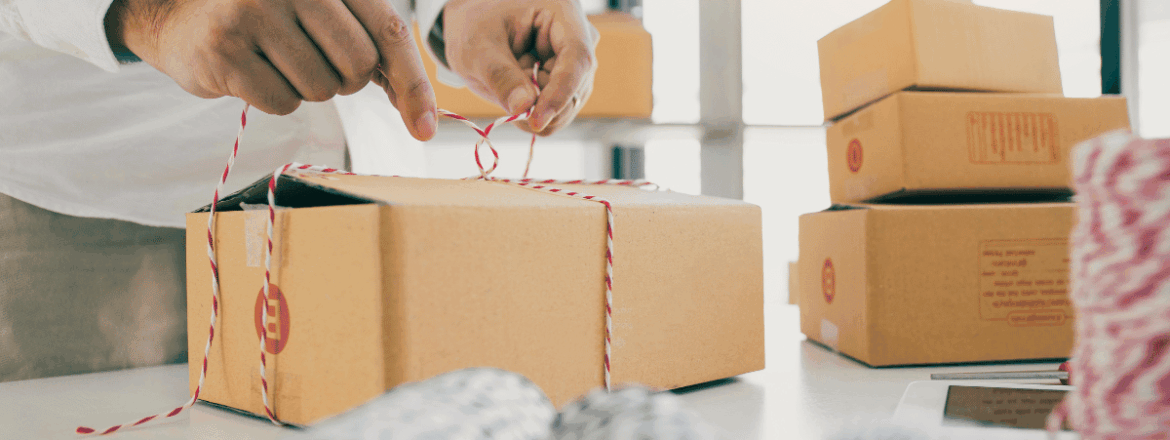
How to Package a Parcel for International Shipping: A Step-by-Step Guide
UDS has been shipping parcels internationally for over 20 years — from Heathrow to Hyderabad, Karachi to California. We’ve seen what arrives intact and what doesn’t. This guide is built on everything we’ve learned from handling tens of thousands of international shipments about what packaging works, what fails, and what costs sellers real money.
Let’s start with a number that should change how you think about packaging: approximately 3–4% of all shipped packages arrive with some form of damage. That sounds small until you do the maths. With over 236 billion parcels projected to be delivered globally in 2026, that’s roughly 7–9 billion damaged packages. In financial terms, shipping damage is estimated to cost businesses $4 billion annually in lost goods and claims alone.
And here’s the part that stings: carriers successfully deny roughly one third of all damage claims because the packaging was inadequate. That means the sender — you — absorbs the loss. The product is ruined. The customer is disappointed. The replacement costs you a second product, a second shipping fee, and often a customer who never buys from you again. Research shows that 51% of consumers are unlikely to repurchase after receiving a damaged item, and 85% say damaged goods negatively affect how they view a brand.
The good news? Most shipping damage is preventable. It comes down to how you package a parcel before it leaves your hands. This guide walks you through every step — from choosing the right box to sealing, labelling, and preparing for customs — specifically for international shipments that face a tougher journey than anything sent domestically.
Why International Parcels Need Better Packaging Than Domestic Ones
A parcel shipped from London to Leeds might get handled 3–4 times before delivery. A parcel shipped from London to Mumbai might be handled 8–12 times — collected from your address, sorted at a local hub, transported to the airport, loaded onto an aircraft, unloaded at a transit hub, reloaded, flown to the destination, cleared through customs, sorted again, loaded onto a local delivery vehicle, and finally delivered.
At every touchpoint, your parcel faces:
- Drops and impacts — parcels are routinely dropped from conveyor belts, stacked under heavier packages, and loaded/unloaded from vehicles multiple times. Industry surveys show 62% of logistics workers have witnessed packages mishandled due to time pressure.
- Compression — your parcel will be stacked beneath other parcels, sometimes several layers deep, in sorting facilities and aircraft holds
- Vibration — continuous vibration during road and air transit can cause items to shift, rub, and gradually break down internal packaging
- Temperature and humidity changes — a parcel going from a heated UK warehouse to an unheated aircraft cargo hold at -20°C, then to 35°C+ heat on arrival in India or the UAE, can create condensation inside the packaging
- Rough sorting — automated sorting systems use tilting trays, conveyor switches, and chutes that can slam parcels sideways
Packaging that’s perfectly adequate for domestic shipping is often completely insufficient for international transit. That’s the fundamental point most online guides miss.
Step 1: Choose the Right Box
The outer box is your first and most important line of defence. Get this wrong and nothing else matters.
Size Matters — In Both Directions
A box that’s too large means your product rattles around inside, increasing the risk of impact damage. It also increases your volumetric weight, which means you pay more for shipping. A box that’s too tight leaves no room for internal cushioning, so the product absorbs every shock directly. The ideal gap between your product (wrapped in protective material) and the inside of the box is 5–8 cm on all sides.
Single-Wall vs Double-Wall Cardboard
For international shipping, we almost always recommend double-wall corrugated cardboard. Single-wall boxes are fine for lightweight, non-fragile items shipped domestically. But for anything crossing a border — especially items over 2–3 kg or anything remotely fragile — double-wall provides significantly better crush resistance and impact protection. The cost difference is typically 20–30p per box. That’s nothing compared to a damage claim.
Never Reuse Old Boxes for International Shipments
We see this constantly and it’s one of the most common causes of damage we encounter. Reused boxes have lost structural integrity. The corrugation inside the walls compresses with each use, reducing the box’s ability to absorb impacts. A box that survived one UK delivery will not survive an international journey through multiple handling stages. Always use new, unused corrugated boxes for international shipping.
Step 2: Select the Right Internal Packaging Materials
Internal packaging serves two jobs: cushioning your product against impacts and filling voids so nothing moves inside the box during transit. Here’s a practical comparison of the materials available:
| Material | Best For | Pros | Watch Out For |
| Bubble Wrap | Fragile items, glassware, electronics, ceramics | Excellent shock absorption, lightweight, conforms to shapes | Plastic-based; use recycled or biodegradable alternatives where possible |
| Air Pillows | Void fill, light cushioning, preventing movement inside box | Very lightweight (won’t add to shipping cost), recyclable options available | Won’t protect heavy items alone; use alongside wrap for fragile goods |
| Foam Inserts / Sheets | Electronics, precision instruments, high-value items | Custom-cut for perfect fit, excellent impact protection | Higher cost; best justified for goods worth £50+ |
| Crumpled Kraft Paper | General void fill, light wrapping, eco-friendly option | Recyclable, biodegradable, cheap, readily available | Compresses over time; not suitable as sole protection for fragile items |
| Corrugated Cardboard Inserts | Dividers between items, extra rigidity, flat items | Strong, recyclable, customisable to box dimensions | Adds weight; factor into volumetric calculations |
| Moulded Pulp | Bottles, jars, electronics, subscription boxes | Custom-moulded to product shape, 100% recyclable, premium unboxing feel | Requires minimum order quantities for custom shapes |
| Anti-Static Wrap | Circuit boards, computer components, electrical parts | Prevents static discharge that can destroy sensitive electronics | Essential for electronics — standard bubble wrap can generate static |
Our recommendation for most international shipments: Wrap each item individually in bubble wrap or foam, then fill remaining voids with air pillows or crumpled kraft paper. For high-value or fragile items, use the double-box method (see below).
Step 3: The Double-Box Method for Fragile and High-Value Items
This is the technique we recommend for anything fragile, breakable, electronic, or worth more than £50. It’s the single most effective way to prevent damage in international transit, and it’s what we advise every e-commerce seller shipping glassware, ceramics, electronics, or premium products.
Here’s how it works:
- Wrap your product individually in bubble wrap, foam, or anti-static wrap (for electronics). Secure the wrapping with tape so it doesn’t come loose.
- Place the wrapped product in an inner box that fits snugly around the wrapped item, with minimal excess space.
- Cushion the inner box by placing it inside a larger outer box with at least 5–8 cm of cushioning material on all six sides — top, bottom, front, back, left, right.
- Fill all remaining voids in the outer box with air pillows, crumpled paper, or foam sheets. Shake the box gently. If anything moves, add more fill.
- Seal the outer box securely with heavy-duty packing tape (see Step 4).
The double-box method creates two layers of protection. Even if the outer box is dented, crushed, or punctured during transit, the inner box and its cushioning absorb the impact before it reaches your product. We’ve seen this method survive the worst handling conditions international logistics can throw at it.
Step 4: Seal Your Parcel Properly
Sealing sounds simple. It isn’t — at least not if you want the box to survive 8–12 handling stages.
- Use heavy-duty packing tape — at least 48mm wide and 50 microns thick. Standard office sellotape or masking tape is completely inadequate for shipping. Brown parcel tape or reinforced packing tape is what you need.
- Apply the H-tape method — run one strip of tape along the centre seam of the box, then add a strip along each edge where the flaps meet the sides. This creates an H-shape on both the top and bottom of the box. It prevents the flaps from popping open under compression or impact.
- Tape all seams, not just the opening — the bottom of the box is under the most stress (it carries the weight of the contents). Reinforce it with at least 2–3 strips of tape.
- Don’t use string, twine, or ribbon — these catch on automated sorting equipment and can cause your parcel to be rejected or delayed.
- Remove or cover any old labels, barcodes, or shipping marks from previous shipments. Multiple barcodes confuse scanning systems and can send your parcel to the wrong destination.
Step 5: Label and Document Your Parcel for International Shipping
A perfectly packaged parcel is useless if it gets stuck at customs because the paperwork is wrong. For international shipments from the UK, your parcel needs:
- A clear shipping label with the full recipient name, complete address (including postcode/ZIP), country, phone number, and email address. The phone number is critical — customs authorities and local couriers use it to contact the recipient if there are clearance issues.
- A customs declaration (CN22 or CN23) for postal services, or a commercial invoice for courier shipments. This must include: a detailed description of the contents, the quantity of each item, the value of each item (matching your sales invoice), the country of origin (where it was manufactured), and the HS/commodity code.
- Your EORI number if you’re a UK business shipping goods commercially.
- “Fragile” labels if the contents are breakable. Place these on the top and at least two sides of the box. Not all handlers will see them, but many sorting systems flag fragile-labelled parcels for gentler handling.
- “This Way Up” arrows if the product has a specific orientation requirement (e.g., liquids, electronics with screens).
When UDS handles your shipment, we take care of the customs documentation, HS classification, and HMRC communication. But if you’re preparing the parcel yourself, getting these details right before collection saves days of potential delays at the border.
Product-Specific Packaging Tips
Clothing and Textiles
Use polythene bags inside the box to protect against moisture. Fold neatly (tissue paper between layers prevents creasing for premium items). A single-wall box with light void fill is usually sufficient. Main risk: water damage, not impact.
Electronics and Gadgets
Anti-static wrap is essential — standard bubble wrap generates static that can damage circuit boards. Double-box method recommended. Remove batteries and package them separately if required by air freight regulations. Include silica gel packets to absorb moisture.
Glassware, Ceramics, and Bottles
Wrap each piece individually. Use dividers between items to prevent them knocking together. Double-box method is non-negotiable. For bottles, consider specialised cardboard bottle inserts or foam wine shippers. Fill every void. If you can hear items moving when you shake the box, add more cushioning.
Food and Perishables
Check destination country import regulations first — many countries restrict or prohibit food imports. Use insulated packaging and ice packs for perishables. Ensure airtight sealing to prevent leaks. Label contents clearly for customs inspection.
Documents and Paperwork
Use a rigid cardboard envelope or a small box with cardboard stiffeners. Mark “Do Not Bend.” For valuable or irreplaceable documents, consider a hardback book mailer or plastic document wallet inside a padded envelope.
Red Flags: The Packaging Mistakes That Cost You Money
After two decades of international shipping, these are the errors we see most often:
- Using a jiffy bag for anything fragile. Padded envelopes offer almost zero protection against the forces in international transit. If your product can break, it needs a box.
- Leaving empty space inside the box. Void space is where damage happens. Your product shifts during transit, builds momentum, and slams into the box wall. Every gap needs filling.
- Over-relying on “Fragile” stickers. They help, but they’re not a substitute for proper packaging. Assume your parcel will be handled roughly regardless of what’s written on it. Package accordingly.
- Wrapping multiple items together instead of individually. Two mugs wrapped together in one sheet of bubble wrap will crack against each other. Wrap every item separately and use dividers.
- Ignoring volumetric weight. Oversized boxes increase your shipping cost because carriers charge by whichever is greater: actual weight or volumetric weight (L x W x H in cm ÷ 5000). Right-sizing your box saves money on every single shipment.
- Not testing your packaging. Before your first international shipment, do a simple test: pack your product exactly as you would for a customer, then drop the box from waist height onto a hard floor. Twice. If the product survives, your packaging works. If it doesn’t, improve it before you ship.
A Quick Packaging Checklist Before You Ship
Print this and tape it to your packing station:
- New, undamaged corrugated box (double-wall for fragile/heavy items)
- 5–8 cm clearance between wrapped product and box walls on all sides
- Each item wrapped individually in appropriate material
- All voids filled — box passes the “shake test” (nothing moves when shaken)
- Heavy-duty packing tape, H-method, on top and bottom
- All old labels, barcodes, and markings removed or covered
- Clear shipping label with full recipient details and phone number
- Customs declaration / commercial invoice attached (description, value, HS code, origin)
- Fragile / This Way Up labels applied if needed
- Parcel weighed and measured (note volumetric weight)
Packaging Is the Cheapest Insurance You Can Buy
The difference between a parcel that arrives intact and one that arrives damaged is usually 50p to £2 of extra packaging material. That’s a fraction of the cost of a replacement product, a refund, a return shipment, and a lost customer. Spending an extra minute and an extra pound on packaging your parcel properly for international shipping is the highest-return investment in your entire logistics process.
At UDS, we inspect every parcel we collect. If we think the packaging isn’t adequate for the journey ahead, we’ll tell you. Not to be difficult — to protect your goods, your money, and your reputation. We’d rather have an honest conversation before collection than deal with a damage claim after delivery.
If you’re shipping internationally and want advice on packaging, customs documentation, or the best shipping method for your products, get in touch. We’ve been doing this for over 20 years, and we’re always happy to help.
About Us
Universal Delivery Solutions (UDS) is a UK-based international logistics company with over 20 years of experience in courier, air freight, sea freight, customs brokerage, e-commerce fulfilment, and warehousing. Based near Heathrow Airport with offices in the UK, USA, India, Hong Kong, UAE, and Pakistan. Contact us at info@udsww.com, call 020 8848 3308, or visit udsww.com for a free quote.
